
At the heart of my creative process is the concept of “accidental collisions”—the unplanned interactions between elements that spark new ideas and directions. I find inspiration in the unexpected, much like William Burroughs’ Cut-Up technique, where random juxtapositions of text create new, hybrid meanings. This approach to generating unexpected connections is central to my work, whether I’m crafting visual art, generative pieces, or prose. By allowing disparate elements to collide—whether images, words, or sounds—I uncover hidden relationships that feel organic and layered.

A significant part of my creative process involves dream recording, which I approach almost like detective work. My dreams, often filled with symbolic imagery and fragmented narratives, serve as a raw source of material that I translate into my prose, collage books, and visual art. In many ways, it feels like assembling a moving image mash-up of symbolism, where seemingly unrelated elements come together to tell a deeper story. Much like the Cut-Ups, the act of recording and interpreting dreams allows me to make intuitive leaps, connecting ideas through association rather than logic.
This hybrid approach feeds directly into my work with collage and generative art, where fragments—whether visual or textual—are layered, cut, rearranged, and allowed to interact in ways that produce new, often surprising, results. By combining traditional techniques with AI-driven processes, I create a dialogue between randomness and control. The unexpected outputs generated by this combination feel similar to the chance discoveries in Cut-Ups or dream symbolism, where meaning is found in the spaces between intention and accident.
Ultimately, my process is about embracing these moments of serendipity, where accidental collisions between forms and ideas lead to something entirely new. Whether through generative art, prose, or collage, I am always searching for those moments of unexpected resonance—those hybrid creations that reveal something deeper beneath the surface.
Coda/iCoda
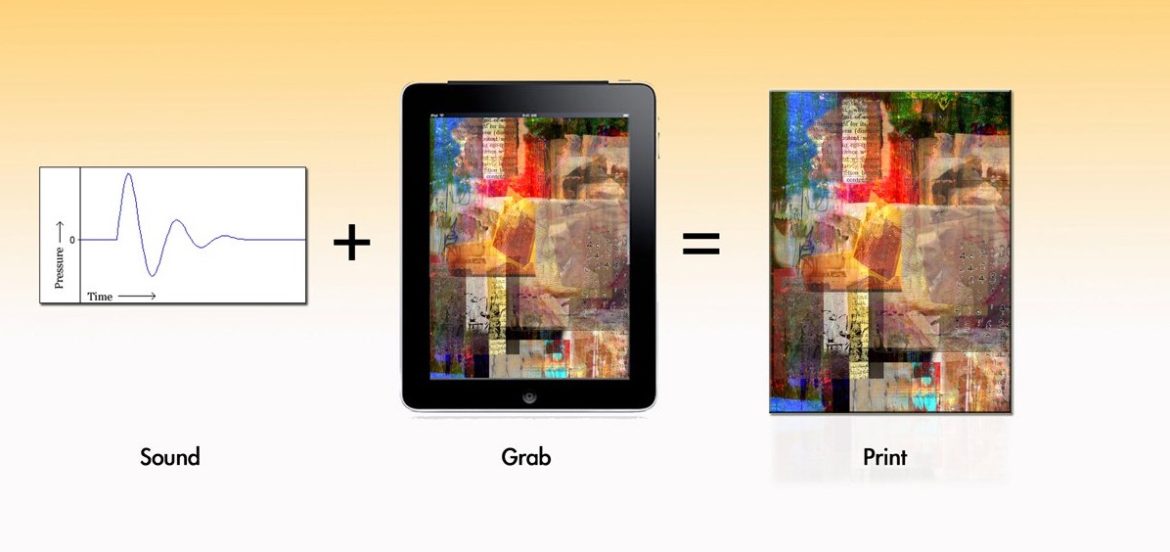
Coda was a software developed with funding from a Teesside University Digital Bursary. A sound interactive application which displays images - from a pre-set library - randomly displayed onscreen by the amplitude and duration of sound.
Functions include Screenshot to capture the random onscreen content, Visual Mixer to manipulate the onscreen duration of images, and Waveform Display. It later became i (image) Coda (the end of sound).
iCoda Desktop
Developed a desktop version for Live Performances, including a visual mixer, screenshot to save the random content.
iCoda Palimpsest
1st Preload content inspired from flood damaged photographs. Released on IOS.
iCoda Preloads
2012 – 2014 I released 4 preloads of Artist’s and Musicians works as i-portfolios or i-singles.
Elisha Sart: New York Collage Artist. New Electric Ride: NE band.
David Carson: LA graphic Designer.
Dreams of Dead Cats: A San Francisco Film Collective
iCoda Open
First version of the open version for mobile. Like the Desktop this mobile version allows you to add your own content from your Camera Roll.
iCodagraph
Or iCoda Health, specificially for Children and early Dementia Adults. Voice Tags added with Voice Recog to add images related to various subjects, such as “holidays” etc.
GenAI
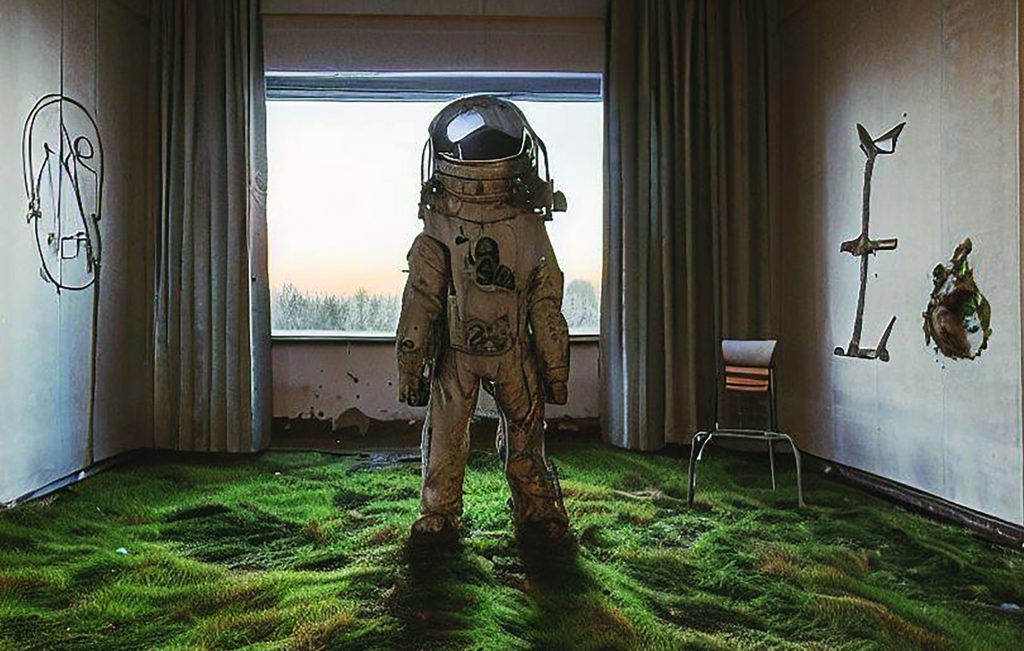
“I have found (GenAI) very useful to push boundaries through accidental or unexpected output during the exploration”
Laurent Thevenet
I have been experimenting with text to image prompt using Artificial Intelligence. At first it was a novelty, creating absurd off the hoof imagery and being gently entertained by the style and juxtapositions. But then I began to realise it was more than this, for instance old script ideas could be given new life, tattered poems ironed out, scenes from forgotten plays, it dawned on me here was a visual engine which could create in a matter of seconds that would take days to produce.